
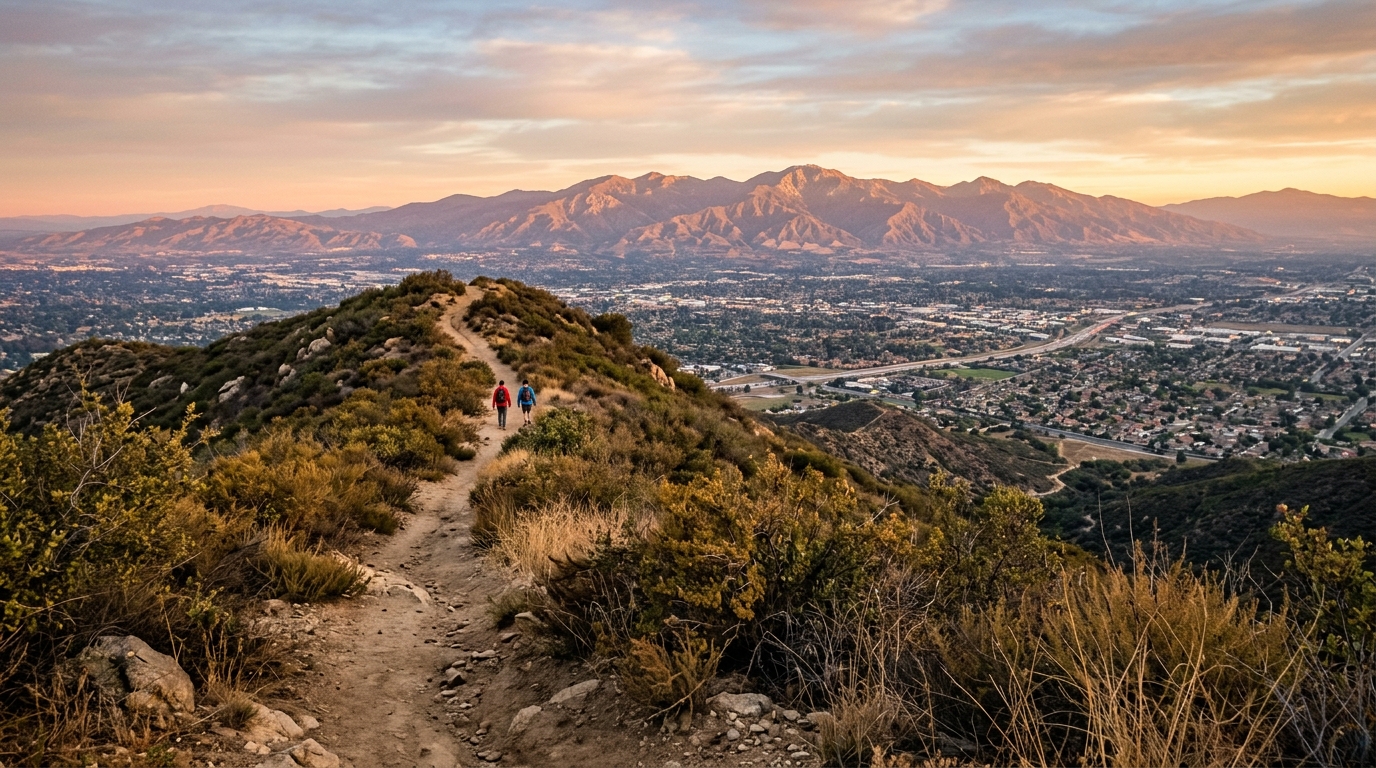
Corona’s western foothills offer two very different ways to get outside without leaving the city behind. Skyline Trail is the better-known choice for broad views, sustained climbing and routes shared by hikers and mountain bikers. Tin Mine Canyon offers a more approachable introduction to the same foothill environment, with routes that have been used for the City of Corona’s ranger-led plant, bird and wildlife programs.
Both areas sit near the edge of the Cleveland National Forest, where chaparral, canyon terrain, exposed slopes and seasonal wildlife create a distinctly Southern California hiking experience. They are also close enough to local restaurants, downtown events and neighborhood businesses to become part of a complete Corona day rather than an isolated outdoor trip.
Summer changes the calculation. Exposed dirt roads and foothill trails can become dangerously hot, shade may be limited and the return trip often feels harder than the outward climb. The smartest summer plan is not to see how far you can go. It is to begin early, select a route that matches your group, establish a turnaround time and return before the strongest heat develops.
This guide compares Skyline and Tin Mine Canyon, explains how to prepare for warm-weather conditions and connects the hike with other things to do in Corona. Before leaving, review the official City of Corona parks and trails page for maps and planning information.
Choosing Between Skyline Trail and Tin Mine Canyon
Skyline Trail for Climbing, Views and a Bigger Workout
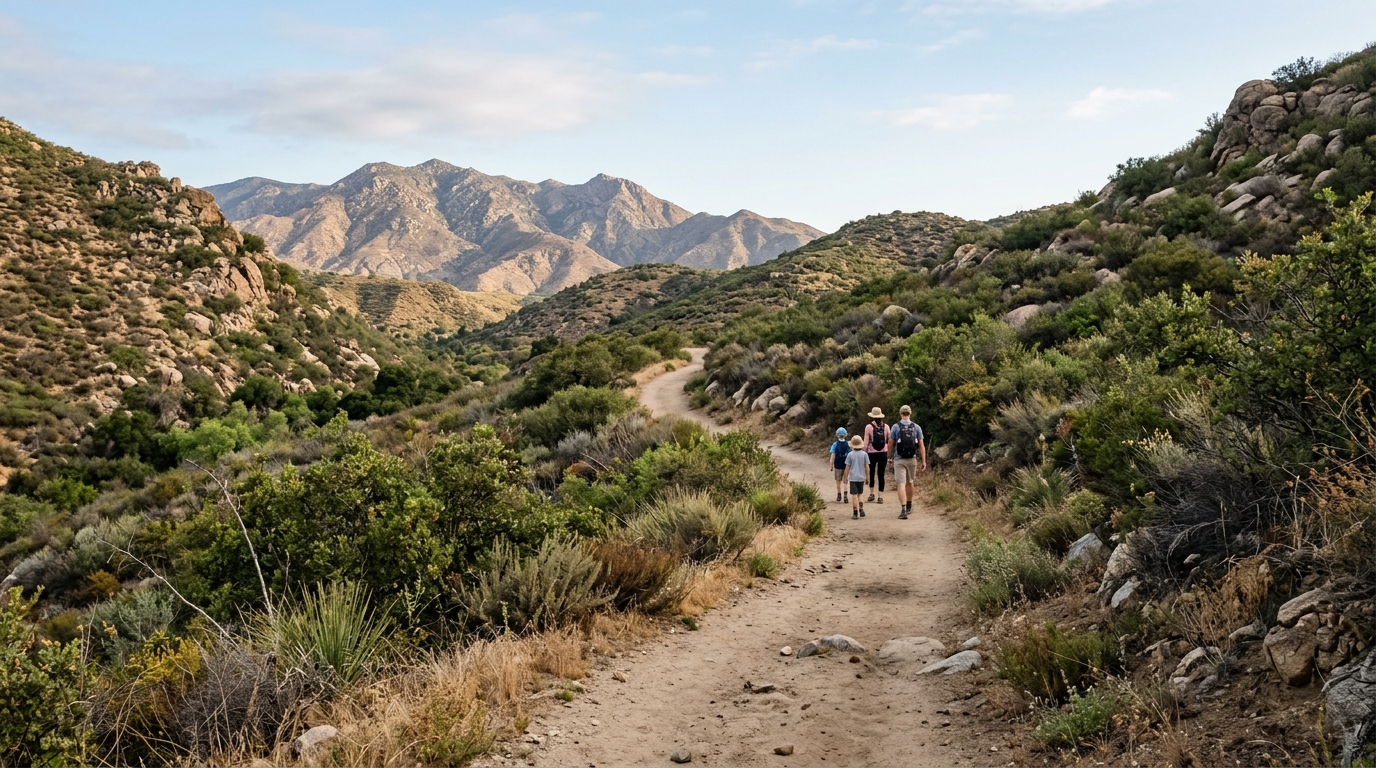
Skyline has become Corona’s most recognizable foothill recreation area. The main route climbs away from the neighborhoods near Skyline Drive and gradually opens toward wider views over Corona and the surrounding Inland Empire. It attracts hikers, runners, mountain bikers and people using the road as part of a longer training day.
The route’s appeal is also its main challenge. Much of the experience is exposed, the climbing can feel relentless during warm weather and the broad dirt road can encourage visitors to travel farther than they should. A destination that feels close while climbing may leave you with a long, hot return.
First-time visitors do not need to complete the entire route. Skyline works well as an out-and-back hike because each group can select a turnaround point based on temperature, daylight, water and fitness. A shorter sunrise walk with fresh legs is usually more enjoyable than forcing a distant target after conditions become uncomfortable.
Mountain bikers and hikers share parts of the area. Stay aware of faster users, avoid spreading across the entire trail and step aside in a predictable direction when someone needs to pass. Headphones should remain low enough that you can hear bicycles, other visitors and wildlife.
When Skyline Is the Better Choice
Choose Skyline when your group wants sustained exercise, open views and a route that can be adjusted without complicated navigation. It is most suitable for experienced walkers, runners and hikers who understand their pace in exposed terrain.
Begin before sunrise or shortly after first light during the hottest months. The cooler start reduces heat stress and gives you more time to respond to a wrong turn, equipment issue or slower-than-expected pace. Establish a firm turnaround time before starting and follow it even when the next viewpoint appears close.
Skyline is not the best choice for every summer visitor. Someone returning to hiking, traveling with very young children or uncertain about steep exposed terrain may have a better experience on a shorter Skyline-area route or at Tin Mine Canyon. Fitness should be judged by the return journey, not only by the ability to climb outward.
Check the weather, air quality and any active forest notices. Wildfire response, trail work, heavy rain or other hazards may affect nearby land. Review the current Cleveland National Forest alerts when your plan approaches forest-managed routes.
Tin Mine Canyon for a Shorter Nature-Focused Hike
Tin Mine Canyon is a useful alternative for visitors who want to focus on plants, birds, wildlife signs and the quieter details of the foothills. The City of Corona has used the area for ranger-led educational hikes covering native plants and local animals, which makes it a natural starting point for families and newer hikers.
The city’s guided Tin Mine Canyon outings have generally been described as approximately three miles, mainly flat with some elevation gain and lasting about two hours at a participant-led pace. That description applies to the organized route used for those programs rather than every possible variation in the area.
Tin Mine Canyon still requires preparation. The surface can become slippery after rain, uneven ground can challenge unsuitable footwear and summer temperatures remain a serious concern. “Family-friendly” should not be confused with effortless or risk-free.
Move slowly enough to notice the environment. Look for differences between sunny and protected slopes, listen for birds before trying to locate them and avoid reaching into brush, rock openings or places where an animal may be resting. Wildlife sightings are never guaranteed, and chasing an animal for a photograph creates unnecessary disturbance.
Guided Hikes and Family Planning
City ranger programs can be an excellent first experience because they add interpretation and a group pace. Corona’s 2026 schedule has included topics such as plant identification, birding and native wildlife in the Skyline and Tin Mine Canyon area. Registration, check-in instructions and route details vary by event, so use the current city recreation listing rather than an older screenshot.
The city recommends that participants carry their own water, apply sunscreen and wear hiking-appropriate clothing, a hat and slip-resistant boots. Walking sticks may help on uneven or slippery sections. Sandals are not appropriate trail footwear.
For an independent family walk, keep the objective simple. Choose a time limit, remain together and turn back before children become exhausted. Bring a small snack, but do not use food to attract wildlife. Adults should carry the essential equipment rather than loading a young child with a heavy backpack.
Dogs may not be permitted on organized group hikes even when rules for general trail access differ, so read the specific event instructions. Pet owners should also consider ground temperature, available water and whether a busy shared trail is appropriate that day.
How to Hike Corona’s Foothills Safely in Summer
Start Early, Carry Enough Water and Plan the Return
The National Weather Service advises limiting strenuous outdoor activity during heat, drinking plenty of water, wearing light-colored clothing and sunscreen and moving outdoor work or recreation to the early morning or late evening. For Corona foothill hikes, early morning is generally the safer option because temperatures usually continue rising during the return.
Check the hourly forecast rather than only the daily high. A forecast of extreme afternoon heat should influence a sunrise plan even when the trailhead feels comfortable at the start. Wind, humidity and direct sunlight can also change how difficult the hike feels.
Do not wait until you feel intensely thirsty to begin drinking. Carry water for the complete outing plus a reserve for delays. Turn around when the group reaches its planned water threshold instead of assuming the remaining distance will be easy.
Heat exhaustion may involve heavy sweating, weakness, dizziness, nausea, headache or confusion. Stop activity, move to a cooler place and begin cooling the person. Heat stroke is a medical emergency that can involve confusion, collapse or very high body temperature. Call emergency services immediately rather than attempting to walk the person out without assistance.
What to Carry for a Summer Foothill Hike
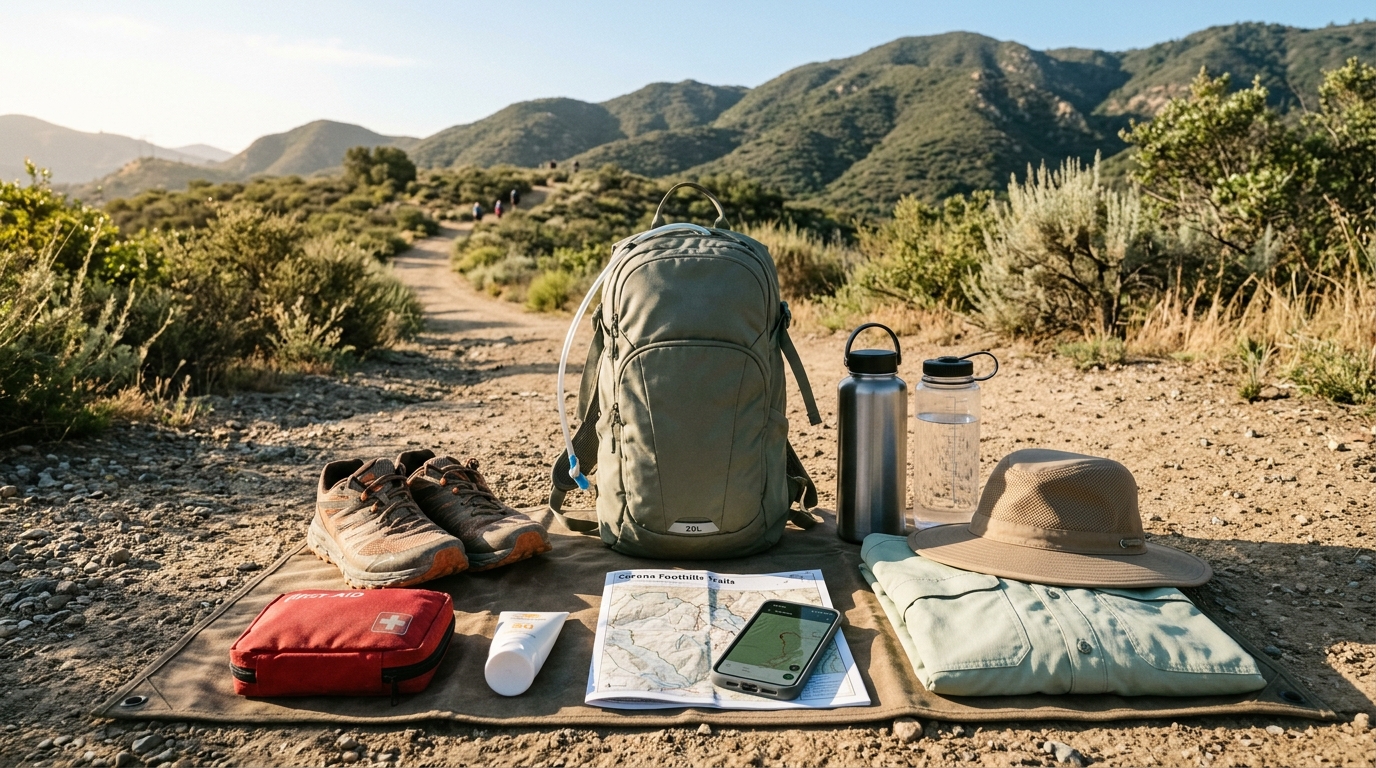
Every person should have suitable water, while the group should also carry electrolytes or salty food for a longer outing, sun protection, a charged phone, offline navigation, a compact first-aid kit and identification. A brimmed hat and lightweight long sleeves may provide better protection than repeatedly exposed skin.
Wear closed-toe shoes with dependable traction. Bring a headlamp even for a morning hike because delays happen, and carry a small power bank when relying on a phone for navigation. A whistle is light, inexpensive and useful if someone becomes separated.
Do not depend on cellular service at every point. Tell someone outside the group where you are hiking, where you expect to park and when you plan to return. Send an update when you finish so an unnecessary search is not started.
Parking, Trail Etiquette and Emergency Decisions
Park legally without blocking gates, driveways, bicycle routes or emergency access. Trailhead neighborhoods are residential areas, so keep voices low during early starts, control vehicle lighting and pack out every item you bring.
Yield predictably to faster users and avoid stopping in the center of the route. Cyclists should control speed around blind corners and crowded sections. Hikers should keep children close and avoid sudden side-to-side movement when a bicycle approaches.
Rattlesnakes and other wildlife may be active in warm weather. Give every animal space and allow it an escape route. Do not attempt to move, touch or pose near a snake. Stay on the established route to reduce contact with wildlife and protect surrounding habitat.
If a person becomes ill, the temperature rises faster than expected or the group uses more water than planned, turn around. A successful hike is one everyone finishes safely. Reaching a viewpoint is never more important than making a conservative decision.
After an early outing, move the rest of the day indoors or into lower-intensity local activities. Use the Corona food and drink guide for breakfast or lunch, explore the changes described in the Downtown Corona revitalization guide or attend an evening event such as the Corona Summer Street Fair.
The Corona weekend guide can connect the hike with family activities and local businesses without placing another strenuous stop in the hottest part of the afternoon.
Skyline and Tin Mine Canyon reveal different sides of Corona’s foothills. Skyline delivers climbing and open views, while Tin Mine Canyon supports a slower nature-focused experience. Choose the route that fits your group, begin early, carry more water than you expect to need and let the temperature—not ambition—decide how far the day should go.